THE COURAGE TO LIVE WITH UNCERTAINTY
By and read by Andrea Malmberg
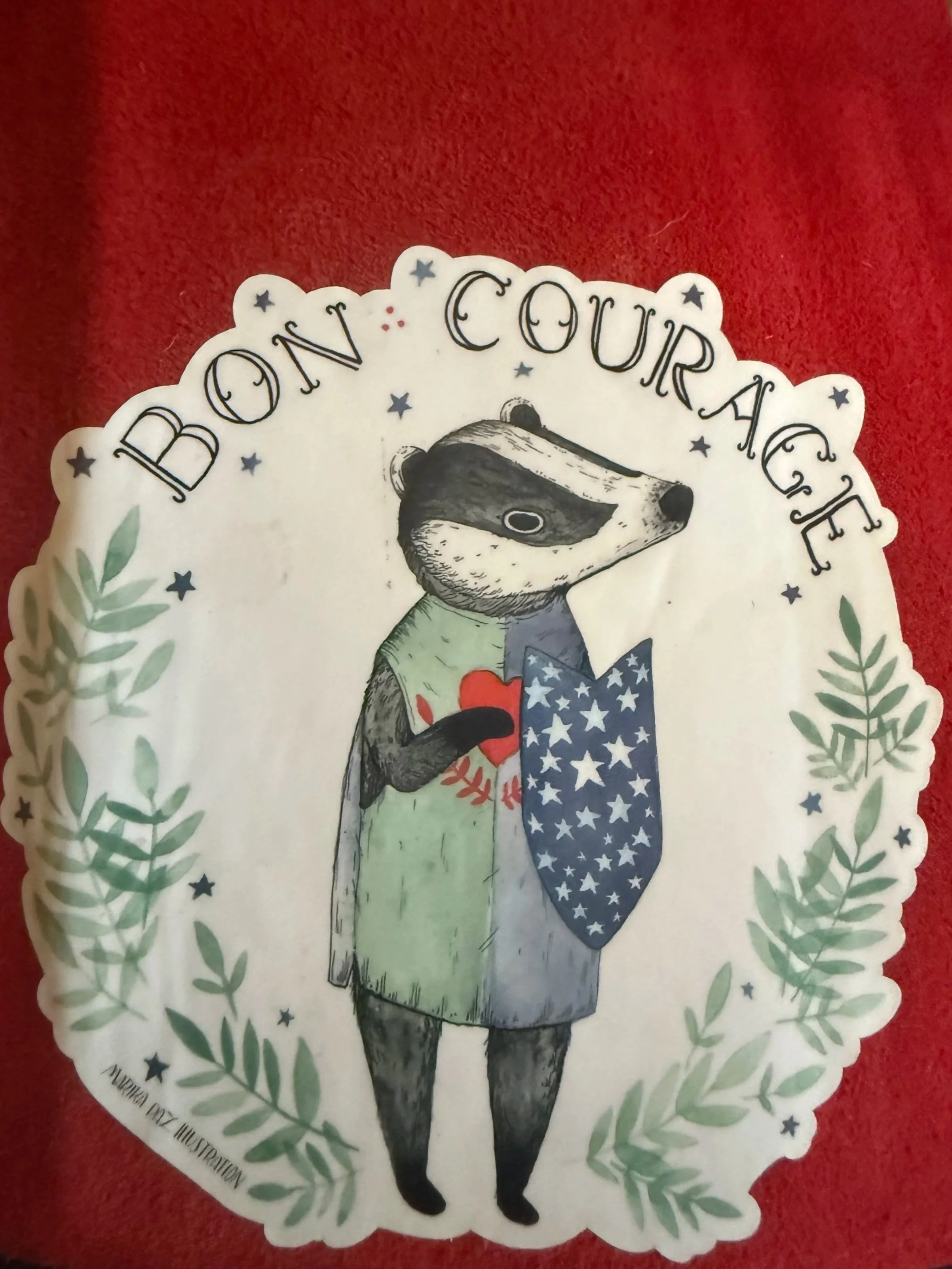
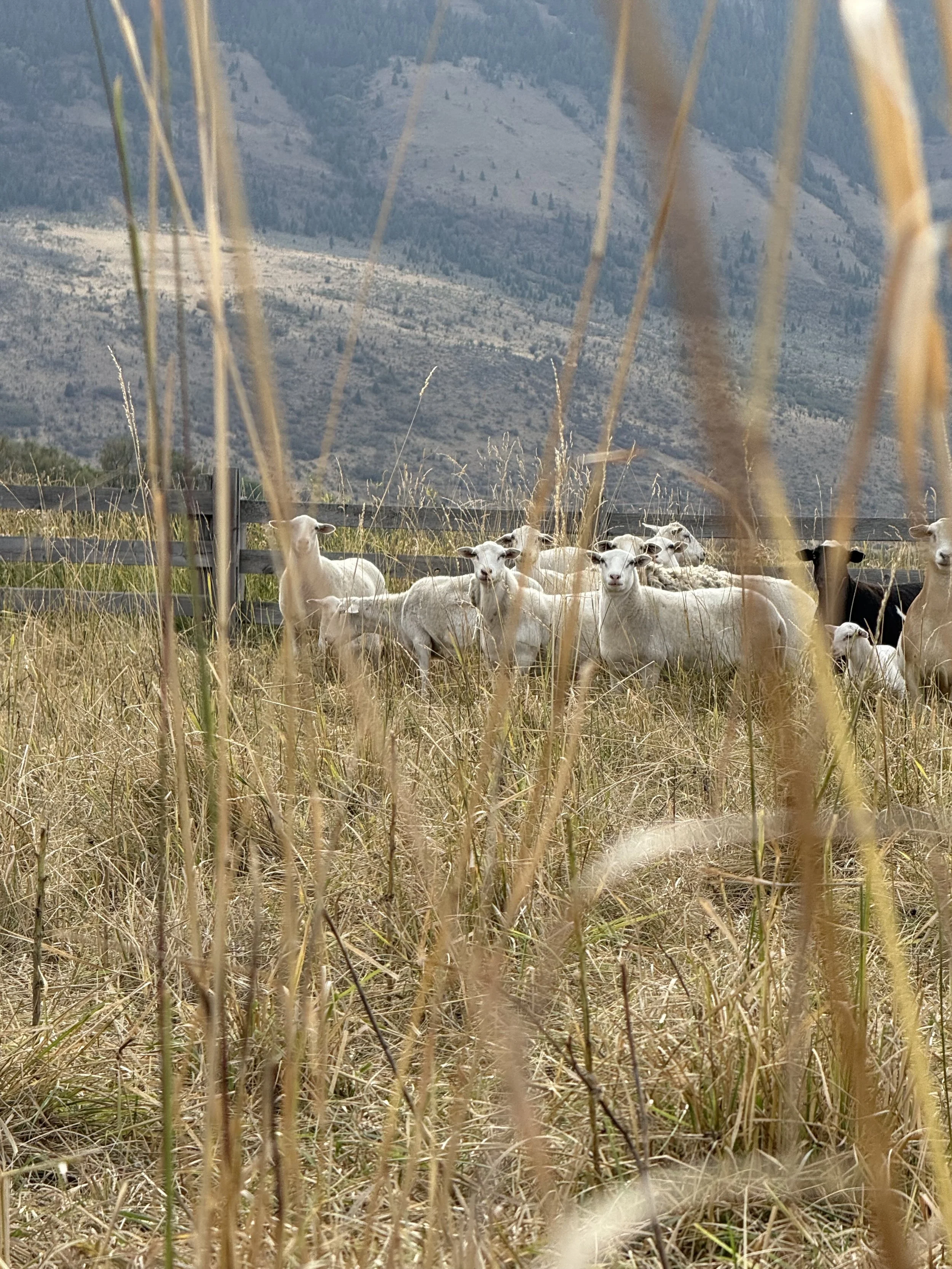
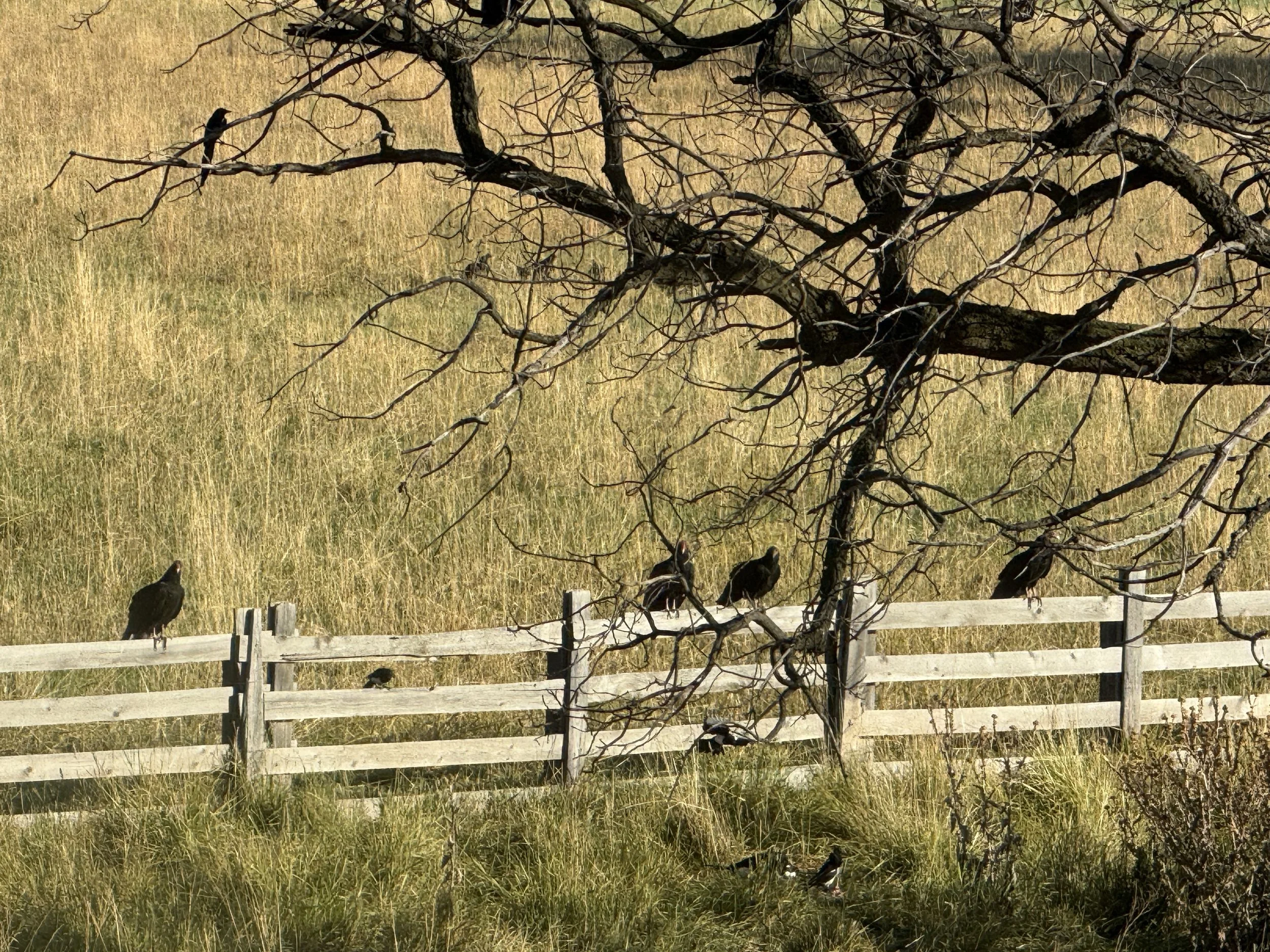
This year I set out to change what my friend Nella calls “Andrea’s Laissez-faire Lamb Company” and really practice Holistic Management with my small sheep enterprise. I planned the grazing beyond weed control and orchard grazing. I kept the flock in pens close to the house that I believed were secure from predators. I bred the ewes to sell lambs for Easter and Passover, and every one was spoken for. Then, I think, foxes took a couple. I moved the sheep closer to the house where the stock/pet dogs could bark to hopefully keep the predators at bay. By the next morning, every lamb was gone, and I was met with over a dozen vultures cleaning up the remains.
As “holisticators,” we plan knowing we live with complexity and thus uncertainty. We assume our decisions may be wrong; we monitor, and we replan. We run more than one enterprise, so losing an entire lamb crop, as I did, doesn’t sink the whole operation. The loss can still feel unbearable, and yet we can still move on and remain whole.
Throughout human history, people lived with that kind of loss and uncertainty about nearly everything. Behind each of us are thousands of problems solved, mistakes fixed, and crises someone got through without knowing how it would turn out. They got good at it because they had to do it all the time. They also had each other.
Many of us have lost both the practice and the people needed to live with uncertainty. We pay for convenience, call someone when something breaks, and look up the answer on a phone, so we rarely have to sit in a state of not knowing for long. We need each other less for the everyday work that used to bring neighbors together.
Meanwhile, the world is handing us more uncertainty than most of us have known in our lifetimes. The weather patterns we used to count on are less reliable, markets swing hard, institutions many of us built our working lives around are changing or coming apart, and public life is so divided that agreeing on what is happening can feel impossible. Most of this is far beyond any one of us to fix, and it is tempting to grip tighter to whatever still feels solid.
Human beings are built for uncertainty, though. We wouldn’t have survived this long otherwise. What most of us need is more practice dealing with it, and doing it alongside others. Holistic Management offers both, starting with how we define the whole we manage.
Allan Savory has helped us understand the difference between complicated and complex. A tractor is complicated. You can take it apart, find the broken part, and fix it. Land, families, communities, and economies are complex because they're made of relationships, so when you change one piece, everything connected shifts too. Allan saw that many of our failures in stewarding land and working with people come from treating complex situations as merely complicated and hunting for one cause and one fix.
Holistic Management was his answer. You start by defining the whole under management: the decision-makers, the resource base you depend on, including the land, the people who support you, and the money. Then everyone agrees on what they want their life to look like, how they must behave, filter each decision toward that, and monitor as though the decision might be wrong, because in a complex world it often will be.
That is a big part of why Holistic Management has held my attention for most of my adult life. The grazing plan, the financial plan, and the monitoring keep you returning to the land and the relationships again and again, making decisions with incomplete information, watching what happens, and adjusting. It gives people a way to keep making sound decisions even when the future is uncertain, and it is meant to be done together so the weight is shared.
Working with people through UVE, particularly in succession planning, I’ve come to see that people almost always know where the trouble is long before anyone says it out loud. You can feel it in the conversation that goes quiet, or the decision put off for three seasons running. So we ask: what should we be talking about, and why aren’t we talking about it now? Often the answer exposes the fears that come with uncertainty and leads to a breakthrough, a decision to behave differently and build new structures and strategies. That moment usually brings exuberance, and in the optimism, it is easy to skip the step of assuming we are wrong.
One tool that brings us back to that step is a pre-mortem, where we imagine the plan has already failed and work backward to figure out why. Usually everything that comes up was already known to someone in the room. The exercise gives people a chance to say what they’ve been carrying, and they will only say it if they trust they won’t be blamed or accused of undermining everyone’s confidence. It’s acknowledging that unspoken risk keeps growing when nobody is talking about it.
Those conversations have friction, and they should, because friction is how new information surfaces. Knowing there are power dynamics, and often trauma, hurt, and pain, in most relationships, I keep wondering how we can create spaces that nurture courage so that raising a hard issue, usually one rooted in uncertainty, helps us design something better.
A line from the 2024 film Conclave has stuck with me. Cardinal Lawrence, played by Ralph Fiennes, says in his homily, “There is one sin I have come to fear above all else: certainty. Certainty is the great enemy of unity. Certainty is the deadly enemy of tolerance.”
When I’m certain, say that my sheep pens are secure from predators, I stop looking closely and start defending my position, and the landscape keeps changing whether I’m paying attention or not. Organizations do the same thing. My friend and colleague in the Savory Network, Jörgen Andersson, recently wrote about watching the Savory Institute bog down, and he named the cause dogma, the point where living, holistic decision-making is replaced by manuals, rigid interpretations of frameworks, and top-down control. In his words, dogma, “whether in a human mind or a global institution, always prevents life.” My interpretation is that dogma gives us a false sense of certainty, and life is uncertain.
It is hard to watch that happen to an organization so many of us helped build, yet I think Jörgen is right. In my experience, dogma can show up when we are afraid, and the people who need the most control are often the least secure. What counters dogma is courage: being willing and able to speak what we know to be true, taking responsibility for our own decisions, being humble, acknowledging the hurt we have caused, and keeping learning from what the land, waters, animals, and people around us are telling us. And while there could be many reasons we struggle with uncertainty, I suspect it is usually a matter of skill because many of us are told to “get it right” and rarely get to practice living within the uncomfortableness.
Watching an organization struggle also makes me think about why people stay in organizations and relationships that are wearing them out. The economist Albert Hirschman described three ways people respond when an organization declines: they leave, speak up, or stay loyal. Other researchers later added a fourth: neglect, where people stay and slowly stop caring. Many people I know are stuck somewhere between loyalty and neglect. The longer they stay, the more of themselves they’ve put into the place, and the harder it is to admit it isn’t working. After enough years, leaving feels like the bigger risk, especially when it would mean leaving your people too.
Mineral Cycling in Action
The land has taught me a lot about coming through hard times. When we graze a pasture or use planned animal impact, the plants are shocked. They lose leaves and have to draw on what’s stored in their roots to regrow. With adequate recovery, that shock triggers new growth, and regrowth can be exponential, coming back thicker and more vigorous than before. Without enough recovery, the same grazing wears the pasture down.
Recovery takes work. During the growing season, holistic planned grazing mostly means figuring out how long each paddock needs to recover based on how fast the plants are growing, moving the animals on time, and watching closely so we don’t graze too soon, stay too long, or come back too soon. Then, in the fall, in my country of Northeast Oregon, if the rains come, plants and soil are put to bed, so the roots have what they need for spring.
People work the same way. Loss, hard seasons, and the conversations we’ve been avoiding can shock us. Yet if we allow repair and real recovery afterward, it can make us stronger — what Positive Psychology calls Post-Traumatic Growth. For people, that recovery comes from rest, support, and community, and somebody has to plan for it and do the work. What I want, for the people I work with and for myself right now, is that kind of resilience and more dignity, and I think much of both comes from calmly facing what we don’t know and building a resource base of people we trust to live with uncertainty.
Money is part of recovery too. Zach Ducheneaux put it plainly on a recent The Business of Soil Health podcast: “If you do not have enough money in the bank to guarantee that you can operate the next year, you are a victim in a conversation instead of a stakeholder.” Bankers have long judged borrowers on four Cs: character, capacity, capital, and collateral. Character is supposed to describe how a person behaves and keeps their word. However, for generations in agricultural lending it has had far more to do with whether a borrower is the right race and gender. Zach has added a fifth C, courage, which he calls the missing ingredient in today’s systems. He is asking lenders to be as courageous as producers.
I think he is onto something, because the first four Cs are all ways of trying to make the future feel certain for the lender, and courage is what it takes to act when it isn’t. It never is. We can nurture our resource base to help us become resilient through uncertainty.
At UVE, we are confident in what Holistic Management can do, and we have evidence that when people practice it, their operations become more biodiverse and profitable. Amid constant uncertainty, profitability is a big part of what makes a family or a ranch resilient. Many of the operators who need it most, though, don’t have the cash to learn and implement the practices to make the transition, and on paper they may not look like a safe bet to anyone.
At UVE, we believe that if we make our services readily accessible, carry some of that risk alongside them, and draw on others dedicated to uplifting the voice of the Ecosystem, we can deepen our roots and widen our collective impact. That takes courage from all of us; the same courage it takes any of us to live with uncertainty, and the kind of courage that grows when we practice it together.
So here I am this fall with a small flock of ewes and no certainty about what comes next for that enterprise. My resource base has been generous with suggestions. Several people have told me to get a livestock guardian dog, and at $2.08 a pound for dog food, I don’t think so. I’ve chatted with Alejandro Carrillo about donkeys, which makes me wonder whether I have the capacity to manage one more kind of animal, or whether I need to find that capacity to restore the uplands I steward. I’ve thought about getting rid of the sheep altogether, and that feels like a betrayal of my flock. I could keep just the ewes for forage management, but the meat is so delicious, and I have customers who want it. I haven’t decided yet. I'll filter each option toward what I want my life and my land to be like, and whatever I choose, I’ll try to get better at assuming I might be wrong, watching closely, and replanning. That is the practice. For me, it takes good people around me and a good dose of daily courage to live with uncertainty.
