

From Institute to Instituting Holistic Management
What might become possible if we treat Holistic Management as a living practice rather than something held by an institution?
By Andrea Malmberg
I have been thinking and feeling my way through the future of Holistic Management for years—long before the recent unraveling of the Savory Institute. I have been engaged in several organizations created to carry out the work of Holistic Management, and I keep returning to a pattern that is not unique to any one of them: we create an organization to serve the work, and, almost without noticing, the work begins to serve the organization.
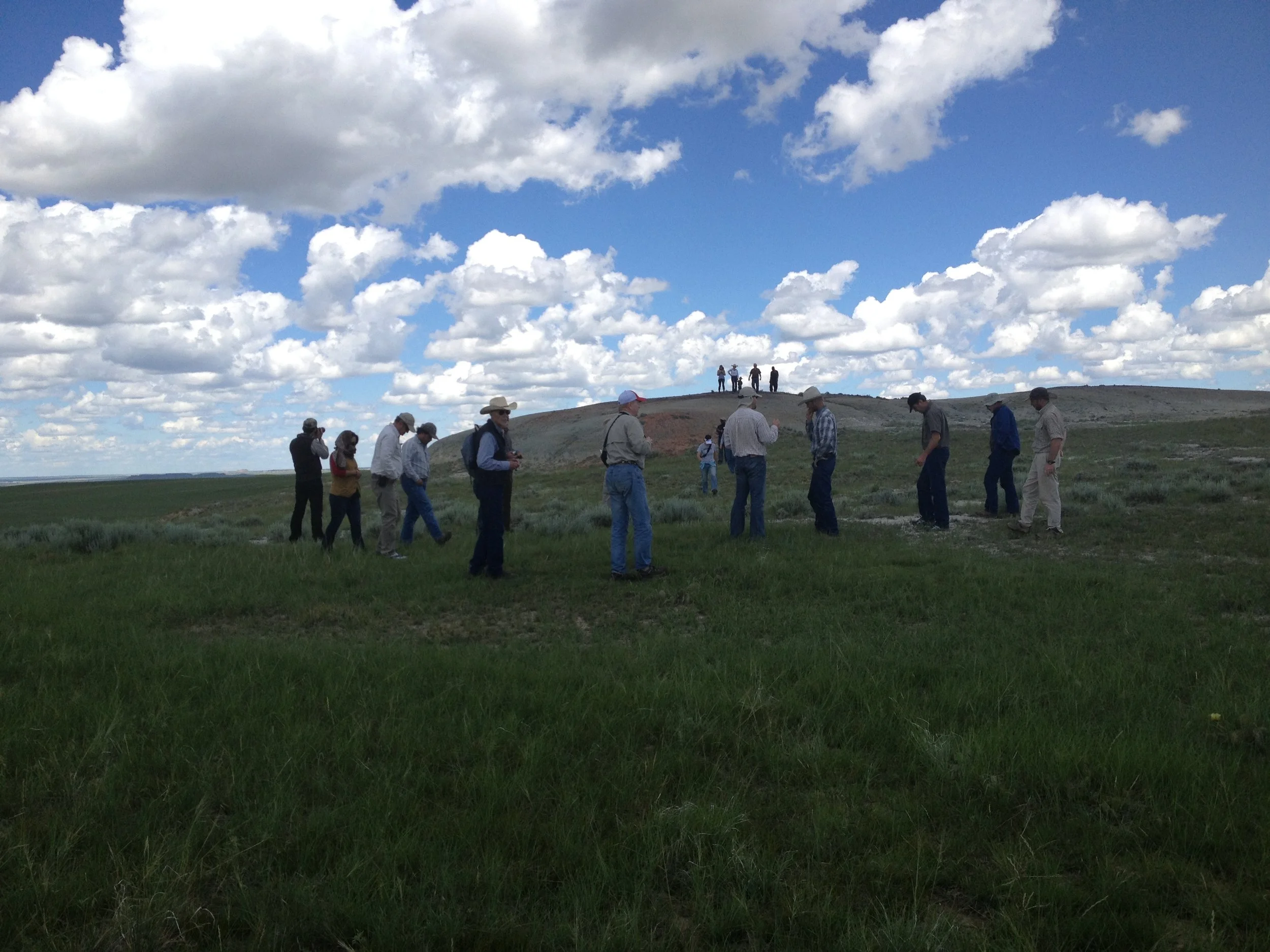
The first Savory Hub gathering at Antelope Springs Ranch, Cohagen, Montana — 2013
To keep hopeful, I have to remind myself that this doesn’t necessarily happen because people are ill-intentioned. What I have seen is that good people build structures that gradually concentrate authority to protect themselves and their perceived power. What tends to happen, however, is that, in the process, other people’s capacities within the organization are diminished. Within the Whole Under Management, attention is placed on the decision-makers, not on the resource base. If it were simply the work of nefarious people, replacing the decision makers might solve the problem. It rarely does.
When we created the Savory Institute in 2009 after a conflict that separated Allan Savory and Jody Butterfield from Holistic Management International, I strongly opposed using the word institute. My concern was more than semantic. I worried about what the word might entice us to become.
To institute means to set something in motion, establish a practice, teach, or bring something into being. Now, institute primarily describes the organization created to do those things. Somewhere in that movement from verb to noun, a living practice can harden into a permanent structure. The container acquires an identity, branding, employees, intellectual property, financial growth for its own sake, and an understandable interest in its own survival.
Eventually, an organization can become more committed to remaining an institute than to continuing to institute the purpose for which it was formed.
While the Savory Institute has largely ceased functioning, Holistic Management has not disappeared. In fact, I believe Holistic Management has grown stronger because of the Savory Global Network, of which UVE is a part. In 2013, a distributed nodal network was formed to share Holistic Management through peer-to-peer local learning and provide Ecological Outcome Verification, thereby empowering decisions at the soil surface. The services UVE and around 50 other hubs and 250 accredited professionals around the world provide—Ecological Outcome Verification, training and professional accreditation, and implementation support — are strong.
Of course, the Savory Institute’s decisions created real chaos, especially for the Savory Institute staff who were let go without severance. However, over the last several weeks, I have had the opportunity to meet a couple of times a week for hours a day with members of the Savory Global Network — people representing 30 countries, to regroup. I have come to realize that not being held together by an institute may not be only a loss. Perhaps it is also a gift. Below are some of my reflections on how we can use this opportunity to self-organize and continue instituting Holistic Management, avoiding, once again, the human tendency to institute.
What happens when the organization becomes the authority?
An institute can create a separation between those authorized to define and certify knowledge and those expected to receive it and implement it.
Paulo Freire described this as the “banking” model of education where those in power “deposit” approved knowledge into learners instead of cultivating knowledge through experience, inquiry, relationship, dialogue, and applied practice.
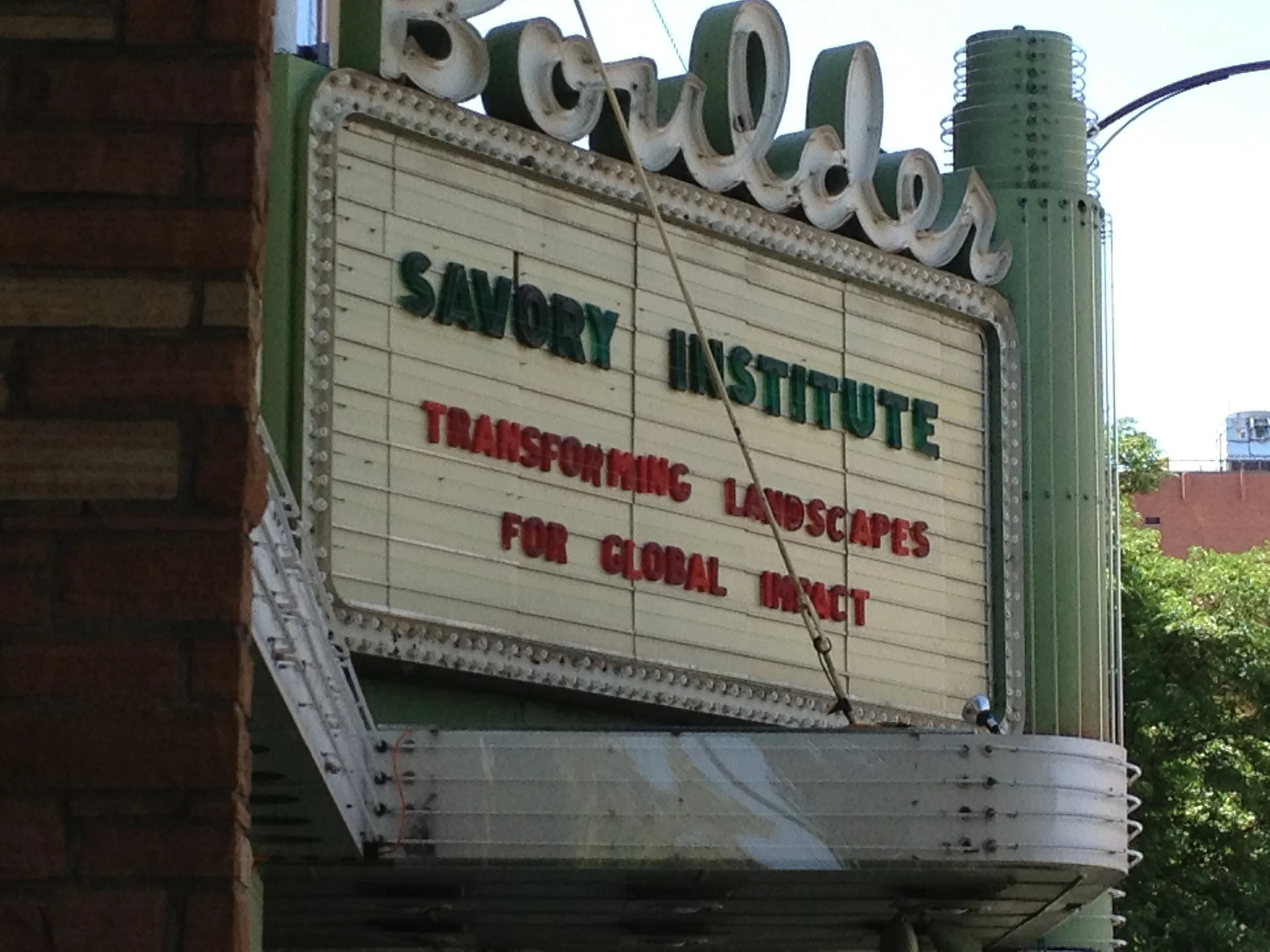
The first Savory Institute gathering, Boulder, Colorado — 2013
That model has always seemed at odds with Holistic Management. The Framework helps people define the whole for which they are responsible, articulate the future they want, test possible actions, monitor what happens, and respond prospectively.
No centralized body can understand the full social, ecological, economic, and cultural complexity of every whole in which Holistic Management is practiced. Yet an institute can gradually become the arbiter of what Holistic Management is, which language is legitimate, who may teach it, and what its correct application looks like.
A framework intended to strengthen people’s capacity to think can become a product they must receive from someone else.
Does that pattern ring true for you? Where have you felt supported in developing your own capacity, and where have you found yourself waiting for permission from the center?
Why participation so easily becomes delegation
More than a century ago, sociologist Robert Michels described what he called the “iron law of oligarchy.” He observed that as organizations grow, organizations' operational demands lead to specialization and delegation. A relatively small group gains the time, information, relationships, and authority required to keep the organization running.
Gradually, participation becomes consultation. People may be surveyed or invited to offer input, but others make consequential decisions. This is precisely what happened a few years after Hubs were admitted to the Savory Global Network , which, by the way, is a costly, rigorous process. Full engagement turned into the Savory Institute reporting to and regulating us. So, those whose jobs were to serve the Network became a governing center whose aim became preserving the brand rather than advancing the movement.
Michels believed this movement toward oligarchy was inevitable. I don’t. Organizations can distribute governance, share information, rotate leadership, maintain meaningful checks on authority, and keep decision-making close to the people it affects. While the Savory Institute failed to do this, the Savory Global Network may be proving otherwise.
People do not need to be dishonest for an institution to begin privileging its own continuity. Imagine trying to control 50+ Hubs and over 250 accredited professionals worldwide! Payroll, the brand, contracts, credentials, funders, leadership positions, and intellectual property create a resource base around the organization. Protecting that resource base can quietly displace the original purpose.
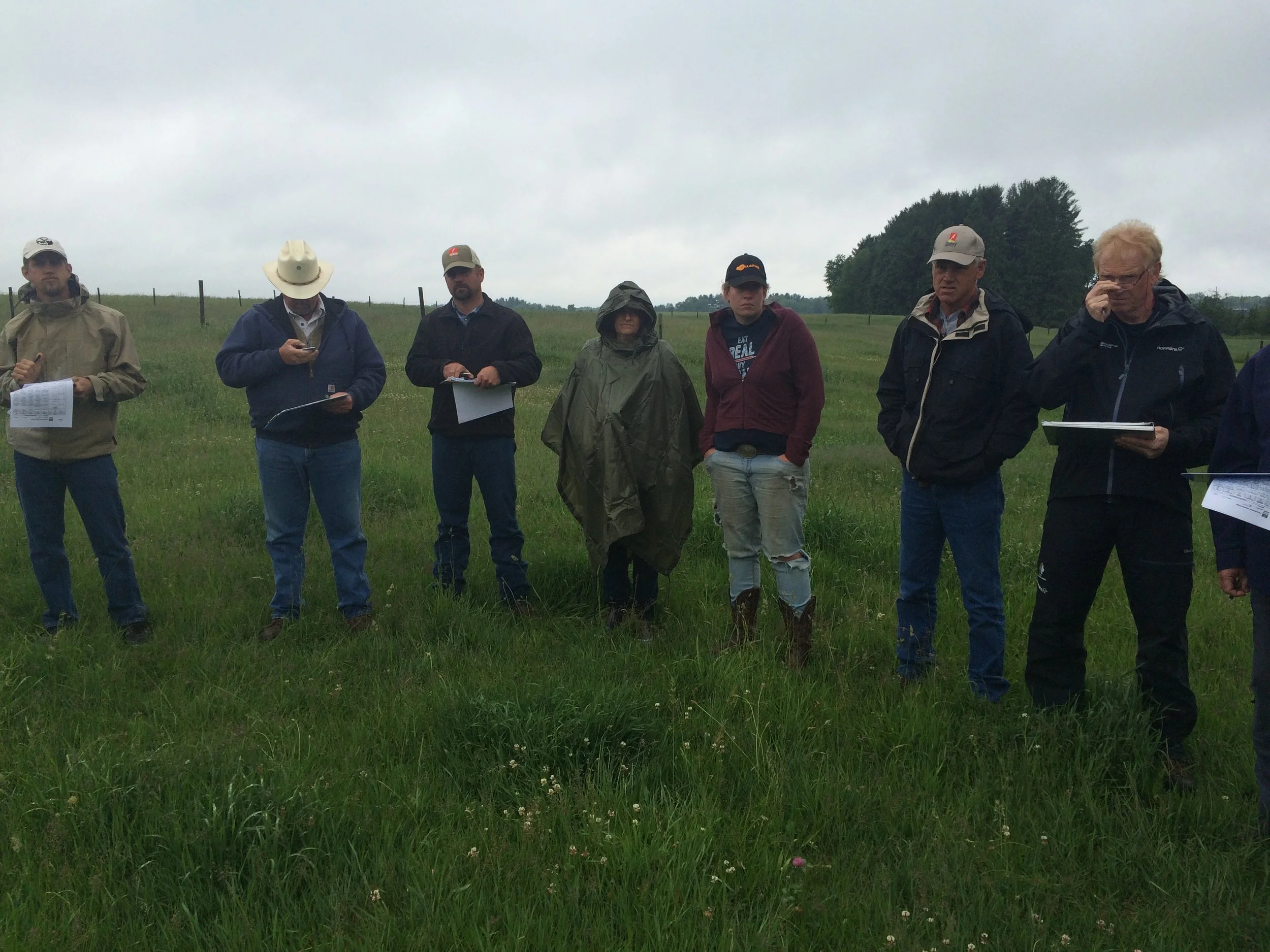
Hubs and scientific advisors creating and learning EOV 1.0 at Michigan State University — 2016
We watched this happen within Savory Institute. Increasing control over curriculum, accreditation, training, Hub relationships, and EOV was often explained as necessary for quality assurance. Some shared standards are necessary. EOV cannot remain credible without scientific rigor, protocol integrity, calibration, and quality assurance. Accreditation means very little unless it reflects demonstrated competence and professional responsibility.
What I continue to wrestle with is how we care for that rigor without enclosing the knowledge or claiming ownership of the people and relationships through which it lives. For me, that is the difference between stewardship and control. Stewardship keeps asking what the work needs in order to remain credible, useful, and available. Control begins deciding who may have access, who may participate, and what must remain under the organization’s authority.
I’m not sure there is a tidy line between the two. That is why we have to keep paying attention. The shift can be nearly imperceptible: we begin by protecting the integrity of the work and end up protecting the institution instead.
Do our systems strengthen capacity or create dependence?
Ivan Illich argued that institutions can eventually weaken the human capacities they were created to support. Schools can lead people to believe that learning requires schooling. Professionalized services can reduce people’s confidence in keeping their own books, implementing their grazing plan, or eating and exercising as they know how.
His alternative was conviviality: relationships, tools, and systems that strengthen personal agency through interdependence. Through conviviality, we enlarge our capacity to act, create, and learn together. Thereby, we are not dependent upon the person or organization that owns it. I believe the reinvigoration of the Savory Global Network has made Holistic Management a convivial tool in that, through the Hubs, people’s ability to understand what their land, finances, relationships, and decisions are telling them has been strengthened. Educators, mentors, monitoring protocols, and planning processes are helping people develop capacities they can carry into their own lives and places.
Holistic Management lives when people use it—in a grazing plan, a financial decision, a difficult conversation, a monitoring transect, a failed experiment, or a succession process.
No institute can practice Holistic Management on anyone’s behalf.
I think this gives those of us who teach, facilitate, monitor, and organize a useful question to carry:
Does our work leave people more capable of observing, deciding, acting, learning, and caring for one another—or more dependent upon us?
At UVE, we need to keep asking ourselves that question too. We are not outside this pattern simply because we can see it in other organizations.
Can we create something without becoming what we oppose?
This is where Joyful Militancy, by carla bergman and Nick Montgomery, has helped me think more honestly about what comes next.
They describe “rigid radicalism”: the tendency of movements seeking change to reproduce the control, certainty, shame, competition, and policing found in the systems they oppose. We become preoccupied with identifying who is wrong, proving who understands the problem, and enforcing the correct position.
The critique becomes another form of control. I recognize this in myself. I have spent time in what I call my revenge-mode thinking—rehearsing what happened, identifying who caused it, and wanting acknowledgment that some of us saw the consequences coming. What brings me back are my dear late husband’s words: “In Holistic Management there is no room for shame and blame.”
Anger has value. It can tell us that a boundary has been crossed and give us the energy to act. But opposition alone cannot show us how to live or work together differently.
Joyful Militancy is not about being cheerful, agreeable, or afraid of conflict. Joy, in this sense, increases our shared capacity to act. Militancy is the willingness to defend the relationships and conditions that allow that capacity to grow. I think of it as disturbance.
In practice, this means staying clear about what we are trying to accomplish without becoming rigid about how we get there. We need to challenge one another, acknowledge hurt, be angry when anger is called for, and still not let blame or resentment determine how we work together. What comes next begins with how we treat one another now. Isn’t this the essence of “How we must behave” in our Holistic Context?
Though I find myself relishing this global team's self-organization for humanity, we naturally place so much attention on maintaining the institute instead of instituting Holistic Management. Joyful Militancy reminds us to focus on our common statement of purpose rather than focusing on how we organize ourselves.
Let’s continue instituting together
Institutions pursue continuity. Living systems self-organize, and through that process, if there is enough complexity and diversity, there is resiliency.
Living systems reorganize around changing conditions. We are all finding that roles emerge and disappear. Disturbance releases resources. New relationships create possibilities we could not have planned in advance. Perhaps what we are witnessing is organizational collapse that is also leading to succession. The Savory Global Network is showing us that it is a living system rather than an appendage of a central institution.
The question now is how we nurture what wants to emerge without falling into the same patterns again.
I no longer think the problem is simply that Savory Institute failed to become strong enough. I think "institute" became a noun when it should have remained a verb.
To institute Holistic Management means continually creating the conditions in which people can practice, learn, test, teach, monitor, challenge, and evolve it.
The Savory Global Network is instituting Holistic Management wherever people organize their lifeways and resources around the wholes for which they are responsible. It is not a distribution system surrounding an institution. The Network is where the action of instituting occurs. Any coordinating organization should hold only what genuinely calls for collective stewardship: credible standards, shared learning, accessible archives, transparent accountability, and the connective infrastructure that helps us find and support one another.
So, what would it look like for us to continue on the self-organizing path of instituting Holistic Management together? How might we protect rigor without enclosing knowledge? How might we keep authority close to the people doing the work at the soil surface? How might our Hubs and enterprises strengthen one another rather than compete? How do we create ways to disagree, learn, repair harm, and change direction without losing relationship?
I don’t have a finished model to offer, and I am increasingly wary of anyone who does. What I do have is a belief that the way forward will emerge through the practice of Holistic Management: by defining our Whole Under Management (and understanding our wholes within wholes), trying things, monitoring what happens, sharing what we learn, and adjusting together.
That work is already underway—in Hubs, learning sites, ranches, communities, classrooms, monitoring teams, working groups, and relationships all over the world.
Our opportunity is to recognize it, connect it, care for what gives it integrity, and make room for more people to help shape what comes next.
Sources and further reading
Paulo Freire, Pedagogy of the Oppressed
Robert Michels, Political Parties: A Sociological Study of the Oligarchical Tendencies of Modern Democracy
Thomas Diefenbach, “Why Michels’ ‘Iron Law of Oligarchy’ Is Not an Iron Law—and How Democratic Organisations Can Stay ‘Oligarchy-Free’”
Ivan Illich, Tools for Conviviality
carla bergman and Nick Montgomery, Joyful Militancy: Building Thriving Resistance in Toxic Times
